x
Passengers
Business
Workforce

Main navigation

  • Flights
    • Book a Trip
    • Arrivals
    • Departures
    • Flight Tracker
  • Parking + Transportation
    • Parking
    • Rental Cars
    • Ground Transportation
  • Passenger Services
    • In the Terminal
    • Safety + Operations
    • Special Needs
    • Passenger Appreciation
  • FAQs
    • About the Airport
    • Flights + Airlines
    • Passenger Services
    • Travel Tips
    • Security
  • News + Statistics
    • News
    • Statistics
    • Media
    • News Archives
  • Community Connection
    • Art + Music in the Airport
    • Honoring Western North Carolina Pilots
    • Make a Suggestion
  • General Aviation
    • General Info
    • Directions
    • Maintenance + Sales
    • Fixed-Base Operator
    • Learn to Fly
    • For Pilots
  • Sign Up — Window Seat E-newsletter
  • Contact Us

Business Menu

  • Airport Authority
    • Annual Report
    • Rules + Regulations
    • History
    • Tenants
    • Ordinances
    • Staff
    • Career Opportunities
  • Doing Business with AVL
    • Advertising
    • Filming on Site
    • DBE/ACDBE Programs
    • RFP-RFQ-RFB
    • AVL Minimum Standards
    • Airport Development Guidelines
  • Planning + Development
    • 2013 MASTER PLAN DOCUMENTS
    • CURRENT MASTER PLAN PROCESS
  • Board
    • Board Documents
    • Board Schedule + Legal Notices
    • Action Agenda
    • Board Agenda
    • Budget
    • Meeting Minutes

Workforce Menu

  • AVL KIND
X        
mobile navbar button
Home

Breadcrumb

  1. Home
  2. News + Statistics
News

News

Stay updated with AVL Airport’s latest news, including announcements, travel tips, and important airport developments. Explore recent stories and insights to make the most of your travel experience and stay informed about what’s happening at AVL.

Swoosh

When you fly home, you're home: Top 10 reasons to Fly4Biz from AVL

January 25, 2017


We’ve got some serious air warriors out there – travelers we see every Monday, and welcome home at the end of each week.  You’re working hard around the globe, and banking some serious mileage!

Some business travelers fly less frequently, so we may not know you by name (yet) – but we sure would like to.  We believe there are excellent benefits to designating Asheville Regional Airport as your airport of choice for your business travel, and here are the “top ten” on our list!


Reason #10 to Fly4Biz from AVL:  We’ve got your last-minute business services covered

From mailing, faxing and printing services, recharge stations throughout the airport, and and free WiFi – we know you may need to take care of a few things before you board the plane.

Reason #9 to Fly4Biz from AVL:  Parking is just steps away from check-in

With numerous parking options – including a lot across the street with 24/7 shuttle service directly to and from the front door of the terminal, you can step from your car and be in the terminal in a matter of minutes.

Reason #8 to Fly4Biz from AVL:  Airlines offer dual-class service, catering to business travelers

AVL is served by three legacy airlines that have excellent products designed just for business travelers. Learn more about business services:  American | Delta | United.  Of particular note, flights from AVL often have dual-class (first-class or business-class) service offered.

Reason #7 to Fly4Biz from AVL:  You can relax

AVL is designed to provide a relaxing, easy experience before and after you board your plane.  Enjoy a quiet corner in a rocking chair, or hang out at the bar overlooking the runway in the Blue Ridge Tavern where there are always local brews on tap.  You may want to wander through the Art Gallery where works by local artists are displayed, or if you’re lucky – you’ll be in the terminal during one of the “Music on the Fly” pop-up concerts by local musicians, sponsored by Ashvegas.com.

Reason #6 to Fly4Biz from AVL:  Easy security lines

Yes, we advise all travelers to arrive two hours before their flights.  That’s just prudent traveling.  However, our TSA security lines are typically short … and when they do get long, the process is efficient.  And if you’re a TSA Pre-check customer, you can enjoy expedited screening at AVL.  While there is not a dedicated Pre-check screening line, you won’t have to remove your shoes, belts or jackets before screening.

Reason #5 to Fly4Biz from AVL:  We strive to know you by name

The courteous airline, TSA and restaurant staff provide excellent customer service.  We often hear from frequent business travelers that they love being greeted by name – that this small gesture makes them feel at home.  That’s our goal, because you ARE at home.  AVL is your hometown airport, and we’re proud of the service offered.

Reason #4 to Fly4Biz from AVL:  When you “fly local,” the whole region benefits

The presence of a vibrant airport significantly contributes to the economy.  Because AVL is here, there are 1,700 jobs in our community, and the economic impact to the region is more than half a billion dollars annually.  So, we always ask travelers to “check AVL first” for all of their air travel needs  High utilization leads to a stronger airport.  And guess what?  Travelers ARE flying from AVL – we’ve experienced record-setting years of passenger growth.  Thank you.  We hope to welcome you back to the airport again soon!

Reason #3 to Fly4Biz from AVL:  We’re a gateway to the world, usually with one easy connection

In 2013, AVL was named the “best connected” regional airport in America by MIT’s International Center for Air Transportation.  Among airports our size, in communities like ours, AVL offers frequent daily connectivity on three legacy airlines via major international hubs (American, Delta and United).  Additionally, AVL has point-to-point non-stop service to some key east coast leisure destinations on Allegiant.

Reason #2 to Fly4Biz from AVL:  There’s no road trip before your business trip

When you travel for business, doesn’t it feel good to get to the airport, go through security and then just begin the air travel process?  Instead of spending an hour or two in the car first, you can hop on a plane to your connecting airport, and then use any layover time to prepare for your business meeting, read, catch up on emails or have a bite to eat.  There’s no major traffic (ok, we admit – I-26 could be backed up due to never-ending construction, but that’s just life in WNC), and you know that your airport experience will most likely be pretty easy.  (You might even be greeted by name.)

Reason #1 to Fly4Biz from AVL:  When you fly home, you’re home.

Business travel is necessary, sometimes exciting (sometimes not), and can be exhausting.  When you’re done with the work at hand, we know you start thinking about home.  You want to be there.  Relaxing in your chair.  Hiking on your favorite trail on the Parkway.  Hanging out at your favorite brewery on the South Slope in Asheville, or just sleeping in your own bed.  So, when you fly AVL for your business trips – the ease works in reverse.  When you land, you see the mountains around you and sigh.  HOME.  You walk off the plane – grab your bag, and in moments, you are to your car.  Maybe you stop along Airport Road to grab some groceries, or perhaps you get a text to meet your husband for dinner at Biltmore Park (you can meet there in ten minutes).  SIGH.  That’s the best.  Welcome home.

Student Artwork Showcase - Students (K-12) represent 6 WNC counties in exhibit

January 19, 2017

(Asheville, N.C.) The Student Artwork Showcase, part of the Art in the Airport program, is the newest exhibit at the Asheville Regional Airport (AVL) Art Gallery. The exhibit will be on display until March 5, 2017. Select pieces will be chosen to remain on display through the end of the school year. Multiple counties across WNC are represented in this showcase, highlighting the creativity of students across our region. A variety of mediums and techniques are artfully exhibited by students from:

Brevard Elementary School
Brevard Middle School
Christ School
East Yancey Middle School
Hillandale Elementary School
​Junaluska Elementary School
Old Fort Elementary School
Tuscola High School
Waynesville Middle School
West Marion Elementary School

The variety of pieces range from colorfully imaginative drawings and collage pieces by kindergarten and first grade students to detailed paintings from high school seniors. The pieces were carefully selected by the art teachers from participating schools. 

"The art gallery is truly a way for both the passengers and public alike to experience a taste of our region," said Alexandra Bradley, Marketing and Public Relations Specialist at AVL and curator of the gallery. 

Asheville Regional Airport's Art in the Airport program is pleased to feature an annual Student Artwork Showcase in its art gallery, highlighting the creativity of students across the region. If your school would like to participate in the next Student Artwork Showcase, please visit flyavl.com and click on Art + Music in the Social Hub to learn more.

# # # # #

Baby, it's cold outside! Deicing: What it is and why it matters

December 16, 2016

If you’ve flown much during the colder months, odds are you’ve been on a flight that had to be deiced before takeoff. Airplanes, especially jets, fly at very high altitudes and very fast speeds. At 35,000 feet, it’s not uncommon to see temperatures dip below negative sixty degrees Fahrenheit. If planes can operate in these extreme subzero temperatures regularly, why is it necessary to deice when on the ground?

The reason for deicing lies within the design of the aircraft itself. All airplane designs are very precisely engineered to be flown as they were built, without the addition of any contamination. No, this doesn’t mean the aircraft can’t become ill with a virus. In aviation, the term contamination often refers to the buildup of ice on the aircraft’s wings and fuselage (the body of the aircraft). Even a small amount of ice on the wings changes the wing’s shape and impacts its aerodynamics. But fear not! As with everything in aviation, there are numerous precautions and procedures for all commercial flights to ensure safe operations in and around icing conditions.

The process of deicing is relatively simple, but there’s a bit more to it than meets the eye. There are primarily two types of deicing fluid that are used in the United States. Both fluids are glycol based but have their differences. The first type, which is orange, is a true deicer. It’s the most diluted form of deicing fluid and is used to remove snow and ice from an aircraft. The other fluid is thicker and designed to stick to the aircraft for a defined period of time, making it more of an anti-ice fluid. Each fluid is applied hot, which is why you see so much steam when deicing in colder temperatures. Your pilot will tell the ground crew exactly what type of deicing fluid they need and where. In many conditions, they’ll just request deicing of the wings and tail.

In conditions where there is no freezing precipitation, you’ll get a spray of of the deicer and be on your way. If it’s snowing, your flight will first get a coat of deicer, followed up with the anti-ice fluid. Based on the temperature and weather conditions, pilots know exactly how long they have to take off after being deiced. If they exceed this hold time, they must return to the gate to be deiced again. Additionally, pilots always visually inspect the wings before taking off in snowy conditions, regardless of how long ago the aircraft was deiced. During takeoff, the deicing fluid blows off the wings as the aircraft gains speed.

Once airborne, aircraft are able to use their own anti-ice and deicing systems. Most jets use hot air from the core of the engine to heat metal surfaces along the edges of the wings to prevent and remove ice.

That said, pilots and Air Traffic Control do all they can to avoid substantial icing conditions. It’s rare to ever spend a substantial amount of any given flight in icing conditions. At high altitudes, air is often so dry that there’s not enough moisture to generate any significant form of icing on the aircraft. Like all phases of flight, aircraft manufacturers, airlines and pilots have handling ice down to a science. Rest assured that if the winter weather is beyond the parameters for safe flight, your flight won’t leave the gate.

The Turning Point: Ground crews work hard to reunite you with your luggage

November 22, 2016

If you’ve ever flown, then surely you’ve landed at an airport, proceeded to baggage claim, spent somewhere between five and ten minutes there and then begun to wonder when your bags will appear on the conveyor belt. “What’s taking them so long out there?” you’ve probably wondered. The job of the airline ground crews is seldom understood and often underestimated.  While delivering your luggage quickly is a priority for all airlines, there are many things that must be done before the ground crew even get around to opening the cargo doors of your flight.

The cumulative act of all things that must occur at the gate between a flight’s arrival and its next departure is known as a turn. The workers outside that handle this job are known as ramp agents, though the position has gained many nicknames over the decades. Most airlines require at least three workers be present to park an aircraft. This allows one person, the marshaller, to guide the plane to the proper parking spot while two other walk next to the wingtips of the plane as it pulls into the gate. Those that walk near the wingtips while you’re parking or pushing back are appropriately named wing-walkers. This three-person crew is usually the minimum staffing level for turning most single-aisle aircraft.

The exact procedures vary depending on the type of aircraft being turned, but the general progression of events is similar for all. Once the aircraft has come to a stop at the gate, the ramp agents must wait for the engines to be turned off, and for the pilots to turn off the flashing red beacon lights. These lights are left on until the engines are no longer generating a dangerous amount of suction or jet blast. When these lights are turned off, the wheels of the aircraft will be “chocked” with large rubber chocks that prevent the aircraft from rolling while at the gate.

Also after the beacon light is turned off, many airlines require the person that parked the aircraft to do a full walk-around of the plane, inspecting for anything abnormal.

After the aircraft is chocked, the ramp agents will then connect the ground power unit (GPU) and pre-conditioned air (PCA) to the aircraft. Aircraft need to stay powered between flights so that things like cabin lights, air conditioning, and all of the cockpit computers continue to run. Most aircraft have an Auxiliary Power Unit (APU), which is a small jet engine near the tail that is used exclusively on the ground to provide power and air conditioning. This, however, does burn jet fuel. That’s why parked aircraft are connected to a GPU, which burns drastically less fuel than any of the aircraft’s own engines. If you’ve ever noticed the black cord running from the nose of your aircraft into a machine, that’s the ground power. The large yellow or orange hose, usually attached somewhere along the belly of your plane, is the PCA hose.

Now that the aircraft is chocked, powered and air conditioned, it’s finally time to offload the bags. Keep in mind, your flight has probably been deplaning (allowing passengers to get off the plane) for three to five minutes at this point. Depending on the size of the plane, one or two ramp agents will get inside of the cargo bin to feed bags to the belt loaders outside. The remaining person will load those bags into the baggage carts. Only the smallest planes have one cargo bin, so if your flight is relatively full the crew will unload one bin at a time. If a flight has eighty bags and they unload one bag every four seconds (this is really cooking, by the way), that’s still a five-and-a-half-minute offload time.

Once all the bags are off, they have to be driven to the location where bags are placed on a conveyor belt to baggage claim.  This drive could be a distance of a few hundred yards (like at AVL) or several miles (like at ATL).   Then, bags are offloaded one-by-one and often by one person. When you factor in the time it takes to move equipment into place, potentially unloading multiple cargo bins, and the fact that the average human is not an Olympic athlete, getting your luggage in less than twenty minutes is a very solid performance by the ramp crew (and “less than twenty minutes” is the norm at AVL – there are some hard-working ramp agents here!).

Another important thing to consider is that this scenario doesn’t account for any adversity. There is a myriad of things that can slow the luggage offload process. Rain, snow, heat and even wind generally slow people down. Any oversized or overweight cargo will slow the baggage offload. The pilots may need to leave the engines running for an extra minute or two once parked, which will slow the entire process outside. Sometimes the ground crew may be short a person. If the ground crew takes a few extra minutes than you think they should, just remember all the steps that go into the turn and when your bag shows up on the carousel. You’ll know exactly how much hard work had to take place for you to be reunited with it.

Leaving the Lights On for You

October 26, 2016

As day turns to night, an airport’s maze of painted markings and symbols transforms into a vast arrangement of backlit signs and colorful lights, each with their own distinct meaning. We thought we’d help you understand the night-time wayfinding that pilots use at airports around the globe.

Taxiways – the “roadway system” that pilots use to get to the runways, are always bordered by blue lighting. Airports equipped with instrumentation to operate during dense fog also have green centerline lighting on their taxiways.  Yellow lights give pilots a warning that there is an intersection, or a stopping point before they enter the runway.

Runway markings can be some of the most complex to the untrained eye, but their lights are the most recognizable in all of aviation. All runways have white lights along their edges, with green lights visible on the active end of the runway (since all arriving and departing flights travel the same direction on a runway) and red lights visible from the opposing end.  As yet another visual aid to pilots, the last 2,000 feet of runway lights alternate white and yellow lights. Likewise, the last 2,000 feet of centerline lights alternate red and white, and the last 1,000 feet are all red.

One of the most impressive lighting arrays can be found in the approach lighting systems, which serve as a visual extension of the runway for pilots and can extend as far as 2,400 feet from the runway.  When using an instrument approach (where the pilots rely on instrumentation rather than the naked eye), pilots must see a visual reference of the runway before descending to a certain altitude in order to continue the landing. During low visibility landings, pilots will see the approach lights first, thereby allowing them to continue the landing.

run2

The next time you’re flying at night, take a closer look at the many different lights you see. Whether you know their meanings or are a casual observer, a good view of an airport’s lighting will never disappoint.

New short-term parking rates go into effect November 1, 2016

October 24, 2016

(Asheville, N.C.)  A parking garage construction project is underway at Asheville Regional Airport (AVL), which has resulted in temporary changes to parking at the airport.  There is plenty of parking for passengers; however, the construction project has resulted in a temporarily reduced number of spaces for short-term parkers.  In order to discourage overnight travelers from parking in its short-term parking lot, and to insure parking availability for short-term users, AVL is changing short-term parking lot rates.  Specifically, the rate will remain at the current $1 for each half hour, up to four hours, to accommodate short-term users of the airport.  After four hours in this lot, a new flat rate of $25 per day will be charged. This fee change goes into effect beginning November 1, 2016.

Why the rate increase?  Long-term, overnight parkers are using the short-term spaces, leaving limited parking for visitors who only need to be at the airport for a short period of time, such as those who are picking up a passenger, or conducting business at the airport.

The fee change is intended to persuade long-term parkers to bypass the short-term lot and park in the long-term, pre-paid or credit card-only lots instead, where daily fees range from $6 to $8.  This, in turn, will insure that spaces in the short-term lot will be available to users who only need to park for a short time.

 “It is a positive step forward for the airport to construct a parking garage, but there are operational issues that we must address in the interim,” said Lew Bleiweis, Executive Director at AVL.  “One such issue is making sure all those using the airport – travelers and short-term visitors – have ample parking available to them.”

A new pre-paid, shuttled lot is located directly across the street from the main entrance.  Travelers may opt to park in this lot, pre-pay $6 per day for the planned duration of their trip, and a shuttle will deliver them to and from the front door of the terminal.  The shuttle is in operation around-the-clock.

Also available to travelers is the traditional long-term lot near the terminal, and the credit card-only lot past the terminal on the right.  Both of these lots are available for $1.50 per hour, up to a maximum of $8 per day.

And for those picking up passengers, a great option is to use a convenient cell phone waiting lot located past the terminal on the right.  There is no charge to park in this lot, but visitors must wait in their vehicles until their passengers arrive, and then exit the lot and drive to the terminal curb to pick up passengers.

The new fee structure for the short-term lot is temporary, and will be in effect until the new parking garage opens next year.  When opened, the garage will offer 1,100 convenient parking spaces directly in front of the airport terminal to serve all customers’ needs. 

Handicapped parking is still located in the short-term lot, directly in front of the terminal.  The fee for handicapped parking has not changed (long-term rate of $1.50 per hour, up to a maximum of $8 per day).  Visit the airport's parking information here.


Asheville Regional Airport Parking Fees


PARKING LOT

CURRENT RATES

NEW RATES AS OF 11/1/16

Short-term Lot

  • Up to 30 minutes = $1
  • Each additional 30 minutes = $1.00
  • Daily maximum (24 hours) = $12.50


  • Up to 30 minutes = $1
  • Each additional 30 minutes (up to four hours max) = $1.00
  • More than four hours = $25 per day


Pre-paid Lot

  • Daily Rate = $6.00
  • Weekly rate = $36.00 (7th day is free)
  • NO CHANGE TO CURRENT RATES

Long-term and Credit Card-only Lots

  • Up to 1 hour = $1.50
  • Each additional hour = $1.50
  • Daily maximum (24 hours) = $8.00
  • Weekly maximum = $48.00 (7th day is free)
  • NO CHANGE TO CURRENT RATES

Cell Phone Waiting Lot

  • NO CHARGE – MUST REMAIN IN VEHICLE
  • NO CHARGE – MUST REMAIN IN VEHICLE


What is turbulence?

September 28, 2016

turbulance

*Ding* “Ladies and gentlemen, this is your captain speaking. We just turned on the fasten seatbelt sign due to reports of some choppy air ahead. We should have it back off in about 20 minutes.” If you’ve flown, you can bet your bottom-dollar you’ve encountered at least some level of turbulence. While turbulence does make some people uneasy, understanding what causes that rough air can help take the edge off.

Turbulence is defined as the unsteady movement of air (or water), and changes in wind speed or direction can be caused by any number of weather phenomena.

Air moves much like water and turbulence can by created in any instance in which two different flows of air are mixed. People often think of storms as the primary cause of turbulent air, but there are other causes as well. Clear-air turbulence, which lacks any visual cues such as clouds, is a relatively common cause of turbulence. Even though this sort of turbulence is invisible, pilots and dispatchers (those who make flight plans) can use wind data to fly around areas that are prone to this type of turbulence. On hot days, thermals (currents of warm air that move upward rapidly) can cause turbulence, and flying over mountains or even hills can also be turbulent because air has to move around them, resulting in updrafts or downdrafts.

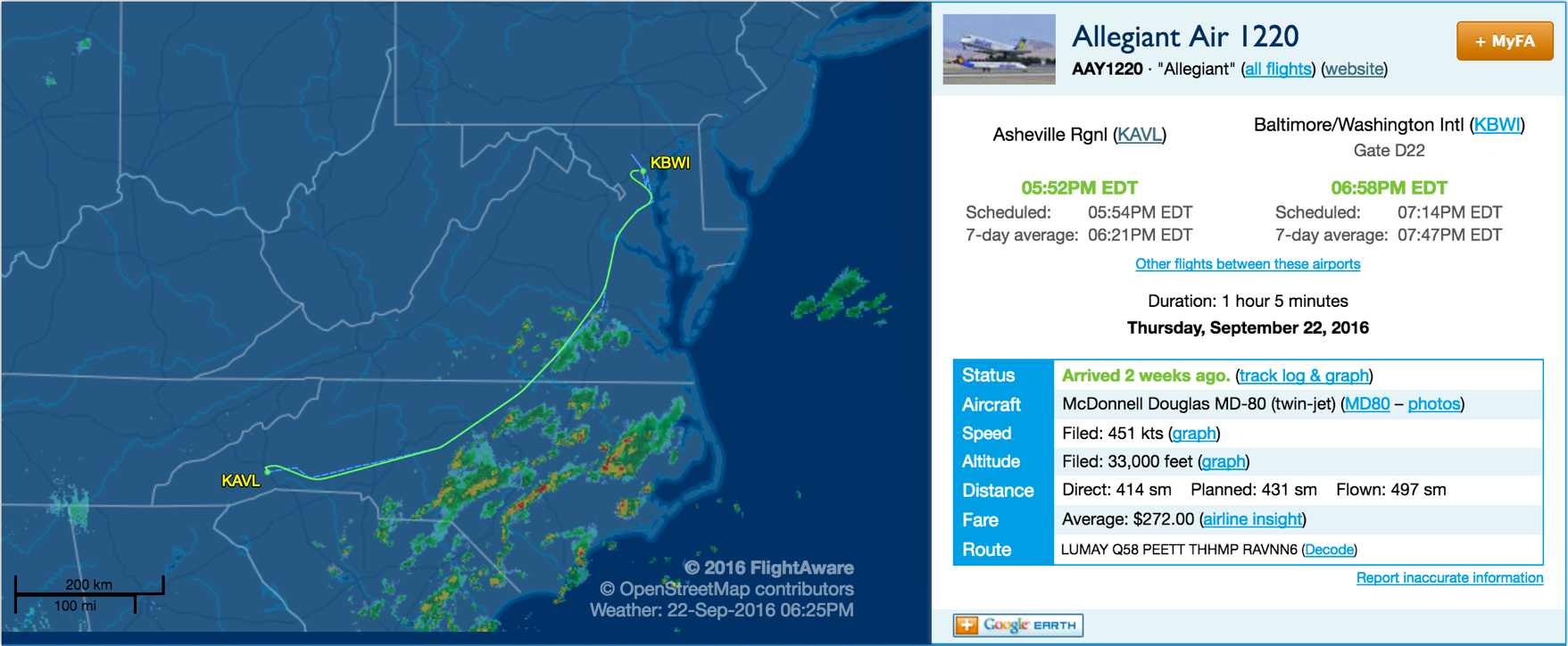
It is comforting to know that pilots and Air Traffic Control (ATC) are always working together to keep your flight as smooth as possible. There is more weather data available today than ever before to help flights avoid rough air. This information not only helps pilots and ATC know what types of weather are more prone to the creation of turbulence, but also helps them see and avoid it. The weather radar in modern jets allows pilots to scan what’s directly ahead at their altitude and altitudes above and below the aircraft. Pilots and dispatchers have the discretion to fly hundreds of miles out of the way just to give you a smoother ride. Here’s a great example of an AVL-bound jet making a slight deviation en-route to avoid a thunderstorm.

Additionally, pilots often provide Pilot Reports (aka, PIREPs) of flight conditions, so aircraft passing through the same airspace know what to expect or avoid — you can see some examples here and here. Given the number of planes flying, there are thousands of PIREPs every day, helping your flights find the smoothest air. That’s how your pilots often know about turbulence ahead of time and are able to climb or descend to avoid it.

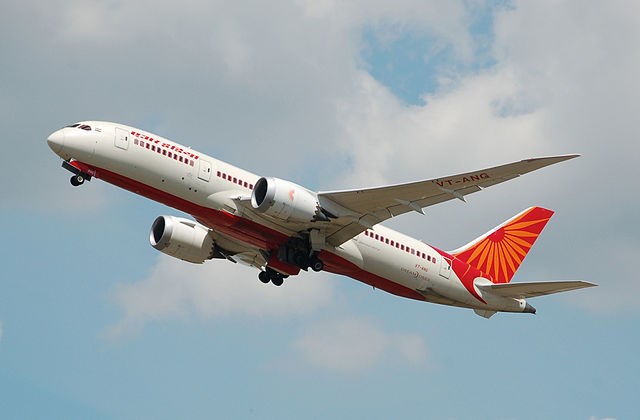
Turbulence is never truly as rough as it may feel to a passenger. In fact, even “severe” turbulence typically only involves altitude changes of 20–40 feet. Aircraft are built to endure much more punishment than they ever endure during commercial flights. In fact, modern aircraft are designed to handle forces 1.5 times stronger than any recorded in the past 40 years of flight. When flights re-route around turbulence, it’s largely for your comfort, as the aircraft would handle the ride just fine. No matter how bumpy your flight gets, the structure of the airplane is far from ever becoming stressed. You can see just how much the wings of modern jets like the Boeing 787 are tested here.

If you’re a nervous or anxious flier, there are many things you can do to help yourself enjoy the flight. You should always try to sit where you’ll be most comfortable. Even on sold-out flights, if you let the gate agent know ahead of time that you really want a window, they’ll try to accommodate you. Make sure you bring along a movie, some snacks, ear plugs and any other creature-comforts that you’d want in any scenario where you’d be sitting for hours. There are apps and online guides (like this one) that’ll help you find other ways to make your trip as enjoyable as possible.  And always – keep that seatbelt fastened when you are seated.

The next time your flight encounters turbulence, loosen your grip on that armrest and remember that you’re experiencing a perfectly routine part of flight — the safest form of travel in human history. In fact, statistically, air travel has been increasing its lead as the safest form of travel for decades. So sit back, relax and enjoy the flight!

Airport to begin construction on new parking garage

September 13, 2016


(Asheville, N.C.)  Asheville Regional Airport is pleased to announce that it will break ground on a five-story parking garage on October 3, 2016.  The construction of a parking garage is part of the airport’s master plan to meet the growing air travel needs in western North Carolina.

“The use of Asheville Regional Airport continues to grow,” said Lew Bleiweis, A.A.E., executive director of Asheville Regional Airport.  “We have experienced two consecutive record years of passenger service, and 2016 has been another strong year so far.  It is time to move forward with our parking garage in order to continue to meet our passengers’ needs for years to come.”

Passengers have been requesting easy, level and covered walking access from the parking area, and the new parking garage will fulfill these requests and enhance the passenger experience.  The garage will be located directly in front of the airport’s main entrance, and will include a covered walkway from the garage to the terminal.  When completed, the garage will hold a total of 1,300 parking spaces, 200 of which will be used for the rental car agencies’ ready return service, which will be located on the lowest level of the garage.  The long-term lot furthest from the terminal will be closed. The construction project will take approximately twelve months to complete.

During construction, approximately 400 parking spaces will be displaced.  Passengers will have several parking options at the airport.  First, there will still be numerous spaces in the short and long-term lots available for customer use.  Additionally, the credit card lot, located just past the terminal on the right, offers 200 spaces, and a temporary lot with nearly 200 spaces directly across the street from the main entrance will be opened for passenger use.  This temporary lot will be a pre-paid lot, and will offer 24/7 shuttle service to and from the terminal curb.

The parking garage is a $22 million project, and capital funding was secured with a general indenture bond.  This type of direct placement bond is very similar to a loan, and was contracted directly between the Greater Asheville Regional Airport Authority and Raymond James Capital Funding, Inc., the lending institution.  The Airport Authority submitted Requests for Proposals for bond funding earlier in the year, and chose the proposal with the best interest rates and term.  The airport is not reliant upon local tax funds to operate the airport, nor for capital funding.  The bond is backed by projected revenues that will be generated by the parking garage, including lease and fees generated by the rental car agencies that use the garage.

During the next three weeks, passengers should not park in the footprint of the new parking garage if they plan to leave a car in the lot past September 29, 2016 at 5pm.  The footprint of the new garage will be clearly marked, and signs are now located at the entrance and throughout the parking lot detailing this requirement.  Cars that remain in the footprint of the new garage after 5pm on September 29 will need to be towed to a different parking location at the airport so construction may begin.

For more information about airport parking, including maps identifying each available parking area and the footprint of the new garage, visit flyavl.com.

REVEALED: Airport art gallery unveils new exhibit highlighting local artists

September 12, 2016

(Asheville, N.C.) Asheville Regional Airport (AVL) art gallery unveils it's newest exhibit today. Revealed is an eclectic group of works highlighting four of our region's artists. The exhibit will be on display through January 6, 2016.

Featured in the Revealed exhibit, textured acrylic paintings on canvas by artist Walter Diehl, soldered glass and rock sculptures by artist R.C. Bob LaBerge, photography and encaustic on wood by artist René Roberts, and mixed media acrylic paintings by Tarah Singh.

The colors and textures seen throughout the exhibit are indicative of dream-like surroundings, expressing what is seen in the mind's eye or a memory. Those traveling through the gallery will be enticed to experience their own interpretation as each piece is revealed to them.

"The art gallery is truly a way for both the passengers and public alike to experience a taste of our region," said Alexandra Bradley, Marketing and Public Relations Specialist at AVL and curator of the gallery. 

Artwork can be purchased from the gallery by emailing art@flyavl.com. Artists who reside in any of the eleven counties within AVL's primary service market may apply for acceptance into upcoming exhibits. Details about the program, including application instructions, can be found on the airport's website at flyavl.com.

# # # # #

Seeking Volunteers: How (and WHY) Flights are Oversold

June 30, 2016

If you’ve ever flown for the holidays, during spring break, or on a peak summer travel day, you’re all too familiar with the gate agent making the announcement that the flight is oversold and they’re seeking volunteers. Most of the time, someone catches a later flight and gets a lovely incentive from the airline to do so. It’s not uncommon to hear various passenger perspectives on why or how this could happen, but it’s never a mistake. Many airlines oversell hundreds of flights as a revenue maximization tactic.  It’s smart business!

Here’s why. People miss flights. Most flights that are booked full never actually leave the gate full. Passengers miss flights for thousands of life-related reasons and airlines track this. Each flight is different, but airlines always mathematically estimate how many people won’t show up for a flight based on historic data and other situational information. They take advantage of this data in an effort to maximize revenues, because once a flight departs, empty seats mean lost revenue that can never be regained. 

A simplified example may help explain.  If one flight has had two people not show up every day for a year, that flight may be marketed to sell 2 more seats than the aircraft holds. Depending on the route and aircraft type, airlines may choose to oversell by as little as one or in excess of a dozen. Again, this happens because if they only sell to capacity, and the people that don’t show up end up getting refunded, that’s lost revenue. Of course, there are many situations where airlines won’t oversell a flight at all because the odds of everyone showing up are very high.

There are other reasons that your flight could end up oversold. There can always be a last minute swap to a smaller airplane for operational reasons. If there’s a cancelation or an irregular situation, airlines could overbook flights that they might not normally overbook in an effort to get everyone where they need to go. It is also possible that the weather may impact whether or not a flight can be oversold.

The good news is that it is very rare for a passenger to be unwillingly removed from a flight because it was oversold. Most of the time it’s a win-win situation:  when flights are missed, the airlines are able to ensure full flights, and nearly all the time, airlines will find passengers who will happily volunteer for a later flight in exchange for incentives such as some cash or flight vouchers. So listen up the next time you’re in the gate area.  When you hear, “Seeking volunteers,” will you raise your hand?  It could be worth it!

Pagination

  • First page « First
  • Previous page ‹ Previous
  • …
  • Page 14
  • Page 15
  • Page 16
  • Page 17
  • Current page 18
  • Page 19
  • Page 20
  • Page 21
  • Page 22
  • …
  • Next page Next ›
  • Last page Last »

Recent News

Asheville Regional Airport Begins TSA Support Drive
Asheville Regional Airport Posts Second-Highest Year in History with 2.24 Million Passengers in 2025
“Art in the Airport” Returns to AVL — Call for Local Artists Now Open
Asheville Regional Airport’s Tina Kinsey Honored with International Ted Bushelman Legacy Award for Creativity and Excellence
Asheville Regional Airport Earns Top Honors at 2025 ACI-NA MARCOM Awards
View Archives
Home

Greater Asheville Regional Airport Authority 61 Terminal Drive, Suite 1 Fletcher, NC 28732

828-684-2226

828-684-3404

pr@flyavl.com

© 2025 Asheville Regional Airport.
Development Partner: Bitcookie

2025 Redesign Footer Menu

  • Passengers
    • Book a Trip
    • Parking + Transportation
    • In the Terminal
    • Arrivals
    • Departures
    • Flight Tracker
  • Business
    • Airport Authority
    • Planning + Development
    • Doing Business with AVL
    • Tenants
    • Board Documents
    • Internal Resources
  • More
    • Special Needs
    • News + Statistics
    • Career Opportunities
    • Report Lost Item
    • Sign Up — Window Seat E-newsletter
    • Contact Us